
Because something isn’t quite right anymore.
That could mean the bite is off, the filling is starting to fail, there’s a crack you didn’t know about, or the nerve inside the tooth has slowly become irritated or infected. It’s rarely random. Pain that shows up months later usually points to a change not just leftover sensitivity.
And no, it’s not something you should ignore and “wait out.” Teeth don’t usually calm down on their own once delayed pain starts.
The timing matters more than people realize
Pain right after a filling? Common.
Pain weeks or months later? Different story.
That delay tells you the problem developed over time. Something shifted pressure, structure, bacteria, or nerve health.
Think of it like this:
| Timing of Pain | What it usually means |
|---|---|
| First few days | Normal sensitivity |
| 1–3 weeks | Bite issue or mild irritation |
| 1–6 months | Structural or nerve related problem |
| Sudden pain after months of being fine | Crack, decay, or infection |
If your tooth was fine and then suddenly started hurting again, that’s a clue worth paying attention to.
Bite problems: the most overlooked cause
This is the one dentists see all the time and patients almost never suspect.
If your filling sits even slightly too high, your teeth don’t meet evenly. That one tooth takes more pressure every time you chew. Over time, that constant stress irritates the ligament around the tooth.
It doesn’t always hurt right away. Sometimes it takes weeks or months before the inflammation builds up enough to notice.
You might feel:
- Pain when biting down, but not when releasing
- A “bruised” feeling in the tooth
- Relief when you avoid chewing on that side
It’s subtle at first. Then it gets annoying. Then it starts affecting how you eat.
The fix is simple: adjusting the bite. Takes minutes. But people delay it for months because they assume it’s something deeper.
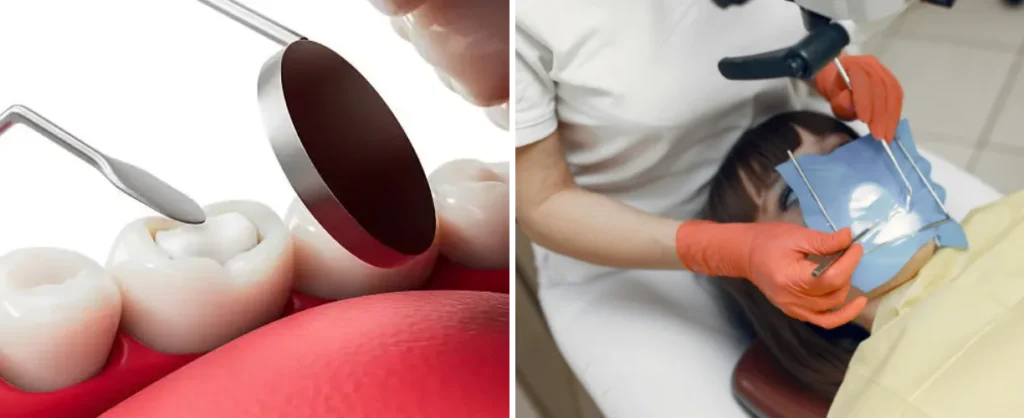
The filling itself might be failing
Fillings don’t last forever. Even good ones can start to break down.
What happens:
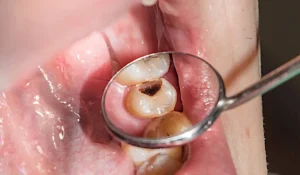
- Tiny gaps form between the filling and tooth
- Bacteria sneak in
- Decay starts again underneath
You won’t see it. You’ll just feel something “off.”
Signs it’s happening:
- Sharp pain with sweets or cold
- A sudden change after being fine for a while
- A rough or slightly loose feeling
This isn’t something toothpaste will fix. The filling usually needs to be replaced before the decay spreads deeper.
Cracks you didn’t notice at the time
Sometimes the tooth was already weak before the filling.
Or the drilling created stress points.
Or months of chewing finally caused a small crack to open.
Cracks are tricky. They don’t always show on X-rays.
What they feel like:
- Sharp pain when biting, especially on release
- Pain that comes and goes
- Sensitivity that doesn’t follow a pattern
If this is the cause, a simple filling adjustment won’t solve it. Depending on severity, it might need a crown to hold the tooth together.
The nerve is reacting… slowly
This one makes people nervous, but it’s common.
Inside your tooth is a nerve. When a cavity is deep, even after cleaning and filling, that nerve can stay irritated.
Sometimes it settles.
Sometimes it doesn’t.
Months later, it can start acting up.
You might notice:
- Lingering pain after hot or cold
- Throbbing that comes without obvious triggers
- Pain that wakes you up at night
That’s not surface level anymore. That’s the nerve struggling.
If it keeps progressing, it usually leads to root canal treatment.
Referred pain not the tooth you think
You feel pain in one tooth, but the problem is somewhere else.
It happens more than people expect.
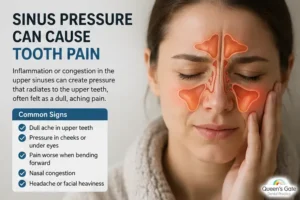
Nearby teeth, sinuses, even jaw tension can create confusing signals.
Especially if:
- The pain feels vague or hard to pinpoint
- Multiple teeth seem sensitive
- It changes location slightly
This is why guessing rarely works. A proper exam matters.
Temperature sensitivity that won’t go away
A little sensitivity after a filling is normal.
But months later? That’s a red flag.
Pay attention to how long it lasts:
- Quick zing that disappears instantly → mild sensitivity
- Pain that lingers 10–30 seconds → nerve irritation
- Pain that hangs around or worsens → likely deeper issue
That lingering response is what dentists look for. It tells them the nerve isn’t happy.
Something small, people don’t talk about: your habits
Grinding. Clenching. Chewing on one side.
All of that adds stress.
If you grind your teeth at night, that filled tooth might be taking extra pressure without you realizing it.
Over time:
- The filling wears unevenly
- The tooth structure weakens
- Sensitivity builds up
If you wake up with jaw tightness or headaches, this might be part of the picture.
Why does my tooth filling hurt after months when I eat certain foods?
Because those foods trigger whatever underlying issue is already there.
Cold → exposes sensitivity or micro-gaps
Sweet → reaches hidden decay
Hard foods → stress cracks or bite issues
It’s not the food causing the problem. It’s revealing it.
What actually helps (and what doesn’t)
Let’s keep it honest.
Things that actually help:
- Getting your bite checked and adjusted
- Replacing a failing filling early
- Imaging + testing if nerve pain is suspected
- Using a night guard if grinding is involved
Things that don’t fix the root problem:
- Switching toothpaste repeatedly
- Avoiding chewing on that side forever
- Ignoring it because the pain comes and goes
- Relying on painkillers long-term
Temporary relief isn’t the same as solving it.
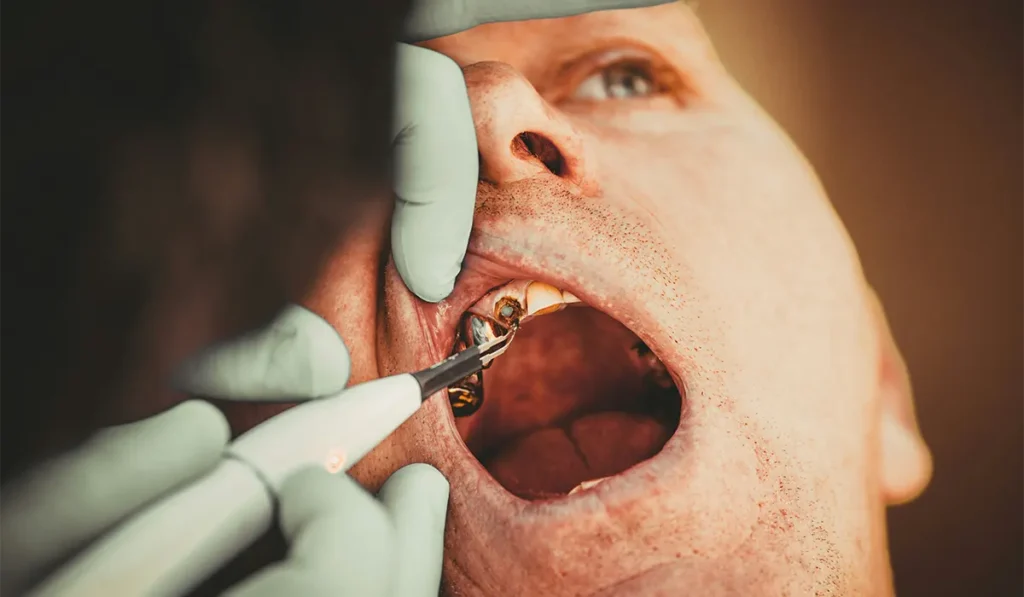
A quick self-check before you book an appointment
Not a diagnosis. Just a way to understand what might be going on.
- Does it hurt when biting down? → Bite issue or crack
- Does cold linger? → Nerve irritation
- Does it hurt randomly without chewing? → Possible infection
- Did it start suddenly after months of being fine? → Structural change
Even one of these is enough reason to get it checked. If the pain lasts more than a couple of days or keeps coming back, it’s usually a sign something needs attention the NHS also recommends getting tooth pain checked instead of waiting it out. (when to see a dentist for toothache)
A lot of patients try to push through it because it’s not constant. Then it gets worse, and the solution becomes more involved than it needed to be.
Our practice tend to focus on preserving the tooth first adjusting, repairing, or reinforcing before jumping to more invasive options. That approach matters if you’re trying to avoid bigger treatments later.
Why people choose Queen’s Gate Dental Practice
Most people coming in with this problem aren’t looking for a lecture. They just want a clear answer and a fix that makes sense.
At Queen’s Gate Dental Practice, the approach is straightforward:
We don’t rush to the most aggressive treatment. We check the basics properly first bite alignment, filling integrity, nerve response and build from there.
Patients tend to appreciate that things are explained in plain language. Not rushed. Not overcomplicated.
And if the issue is something small, they deal with it early instead of letting it turn into something bigger.
That alone saves a lot of stress.
If your filling has started hurting again, don’t wait for it to settle.
Get it checked while it’s still a simple fix.