A cavity doesn’t “arrive” one morning. You don’t wake up and suddenly have a hole in your tooth.
Most of the time you’re looking at months to years before things reach that stage.
But the frustrating part is this: the damage starts long before you feel anything. Long before you see anything too.
It starts earlier than you think
Right after you eat, bacteria in your mouth start breaking down sugars and carbs. Acid shows up quickly. Your enamel takes the hit.
Nothing dramatic happens at first. No pain. No obvious sign.
Your saliva tries to fix things. It pushes minerals back into the enamel. That cycle repeats every day—damage, repair, damage, repair.
When repair keeps up, nothing happens. When damage starts winning more often, things slowly shift.
You won’t notice it at this stage. That’s the problem.
Clinically, this is the stage dentists refer to as initial demineralisation, and it’s often reversible if caught early.
White spots are the first real warning
Before a cavity becomes a hole, enamel starts losing minerals.
It shows up as faint white patches. Easy to miss unless you’re looking closely in good light.
At this point, the tooth surface is still intact. No hole yet. That’s important.
Dentists often catch this during routine checkups before patients feel anything at all. It’s also the stage where fluoride and dietary changes can still reverse damage, something supported by long-term findings in preventive dentistry research.
Change your habits here and things can recover. Give your mouth fewer acid attacks, let saliva do its job, use fluoride properly, and the process can slow down or even reverse it.
Most people don’t catch it here. They wait for something they can feel.
When it turns into a real cavity
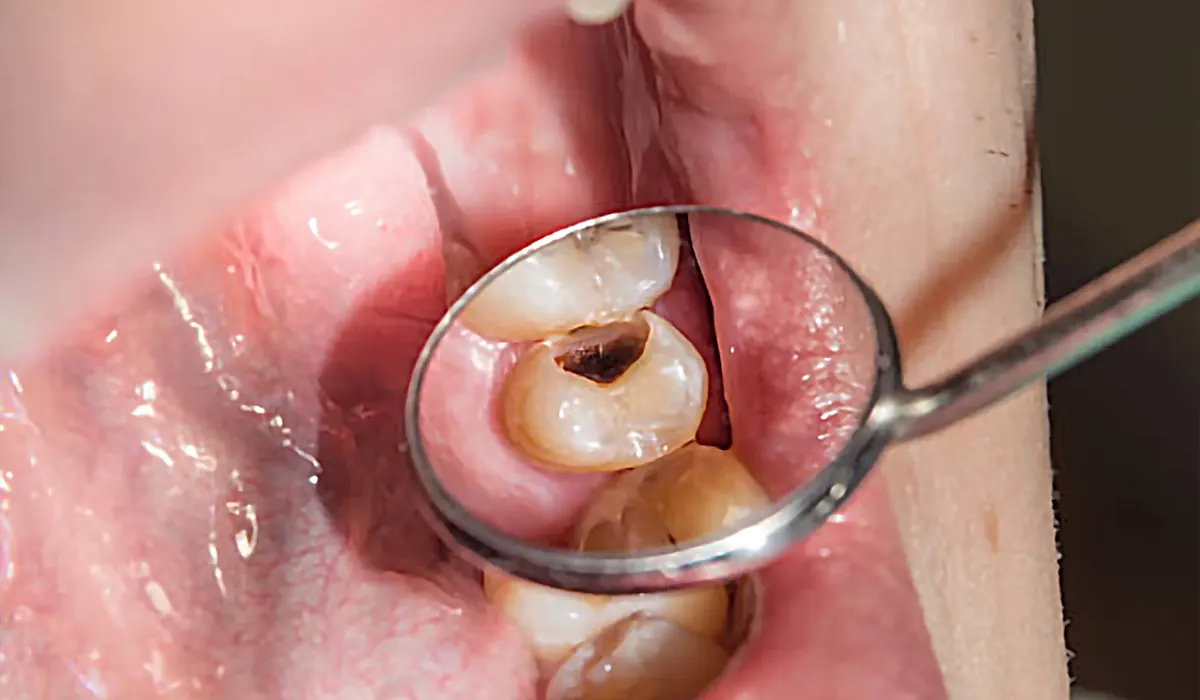
Once the surface breaks, things shift.
Now it’s not just surface damage anymore. The enamel has given way and bacteria can move deeper.
Progress becomes less predictable at this stage. Some teeth hold steady for a while. Others deteriorate faster, especially in areas that are harder to clean.
Molars are usually the first to go. Deep grooves trap food. Toothbrush bristles don’t reach everything, no matter how careful you are.
Between teeth is another common spot. You won’t clean that area properly without floss. Brushing alone misses it.
This is also where most “unexpected” cavities are actually found during dental X-rays, not because of pain.
Why the timeline changes so much between people
Two people can eat the same food and still end up in completely different situations.
The difference usually comes down to what’s happening between meals, not just what’s on the plate.
Frequent snacking keeps acid levels high all day. Your teeth don’t get a break. No recovery time means faster breakdown.
Dry mouth speeds everything up too. Less saliva means less natural cleaning and weaker repair. The American Dental Association lists dry mouth as one of the strongest predictors of accelerated decay risk.
Some medications make this worse without people realizing it. Allergy tablets, antidepressants, blood pressure meds many reduce saliva flow.
Tooth shape matters as well. Deep grooves or tight gaps between teeth trap plaque more easily. You can’t always brush your way out of that.
From a clinical point of view, this is why dentists rarely talk about “one timeline fits all.” Risk profiles matter more than general averages.
A realistic timeline of how long cavities take to form
Low-risk mouth
- Regular meals
- Good brushing habits
- No constant snacking
Decay, if it starts, moves slowly. Often 2 to 5 years before it becomes a real issue.
Moderate-risk mouth
- Snacking during the day
- Occasional sugary drinks
- Brushing is decent but not perfect
Things move faster here. Usually 6 months to 2 years before a cavity becomes noticeable.
High-risk mouth
- Dry mouth
- Frequent sugar or soft drink intake
- Inconsistent brushing
Now things speed up. Cavities can form in a few months, sometimes less in vulnerable areas.
Clinical studies on caries progression consistently show that frequency of sugar exposure matters more than total sugar intake — a point also reinforced in research from the Cochrane Oral Health Group.
Where cavities form changes everything
Molars and grooves
Food gets trapped in deep grooves. Hardest area to clean properly.
Between teeth
Silent zone. Brushing misses it. Flossing matters most here.
Smooth surfaces
Slower progression due to constant saliva exposure.
Exposed roots
Soft surface once gums recede. Decay can move quickly here.
Root caries progression is especially documented in older adult populations due to cementum being significantly softer than enamel.
Cavities don’t always keep getting worse
Something people don’t expect: early damage can pause.
If conditions improve—less sugar frequency, better hygiene, fluoride use—the process can slow down or even stop at the early stage.
That white spot doesn’t always turn into a hole.
Dentists sometimes monitor these lesions for months before deciding on intervention.
But leave things as they are, and it restarts.
That’s why someone can seem fine for years, then suddenly need treatment.
The damage was already there. It just hadn’t crossed the point where it becomes obvious.
Small signs people usually ignore
Nothing dramatic shows up early.
Sometimes you get a slight sensitivity when drinking something cold. Not pain. Just a quick sharp feeling that disappears.
Sometimes a tooth feels slightly different when you run your tongue over it. A bit rough in one spot while everything else feels normal.
Food sticking in one area repeatedly is another quiet clue.
Clinically, these are often early indicators picked up before X-rays even show clear cavitation.
Most people brush it off. Life gets busy. It doesn’t hurt, so it feels harmless.
That’s usually where things slip forward unnoticed.
Does dry mouth from medication really make that big a difference?
Saliva is your mouth’s immune system, plumbing system, and cleanup crew all in one. Without enough of it, cavity formation time roughly halves. The American Dental Association lists medications that cause dry mouth.
Can a cavity heal on its own?
Only at the very early stage.
Once there’s an actual hole, enamel doesn’t rebuild itself. That part is permanent without treatment.
But early mineral loss can recover if conditions change. Less frequent eating, proper fluoride use, and better cleaning habits can help the tooth repair that surface layer.
After it breaks through, it stops being reversible.
This distinction is important in preventive dentistry and is consistently supported in clinical guidelines from preventive oral health research bodies.
Why timing matters more than people think
Cavities don’t hurt when they start. They hurt when they’ve already progressed.
That gap between “starting” and “feeling it” is what creates the confusion.
You can have something developing for a year and feel nothing, then suddenly it becomes sensitive or painful within weeks.
That’s not it appearing suddenly. That’s it finally reaching a stage where nerves are involved.
Why Queen’s Gate Dental Practice
Queen’s Gate Dental Practice approaches this in a very straightforward way. No dramatic language. No rushing into treatment just because something “might” be wrong.
Early detection is treated seriously because evidence in preventive dentistry shows intervention at the white spot stage can avoid invasive treatment later.
Give teeth constant exposure and damage builds quietly. Give them recovery time and the process slows down or stops.