The short answer? They save your teeth from your own brushing habits.
A dental hygienist is a licensed preventive oral health professional. Their primary role involves keeping your mouth healthy through professional teeth cleaning, disease screening, and patient education on proper home care. They perform the scale and polish you know, but their actual scope extends far beyond scraping. Hygienists serve as your first line of defence against gum disease and decay, working alongside your dentist to help your teeth last a lifetime.
The Main Responsibilities of a Dental Hygienist
A hygienist’s job combines clinical work, education, and detective work. During that 30 to 60-minute appointment, here’s what actually happens.
Professional Teeth Cleaning
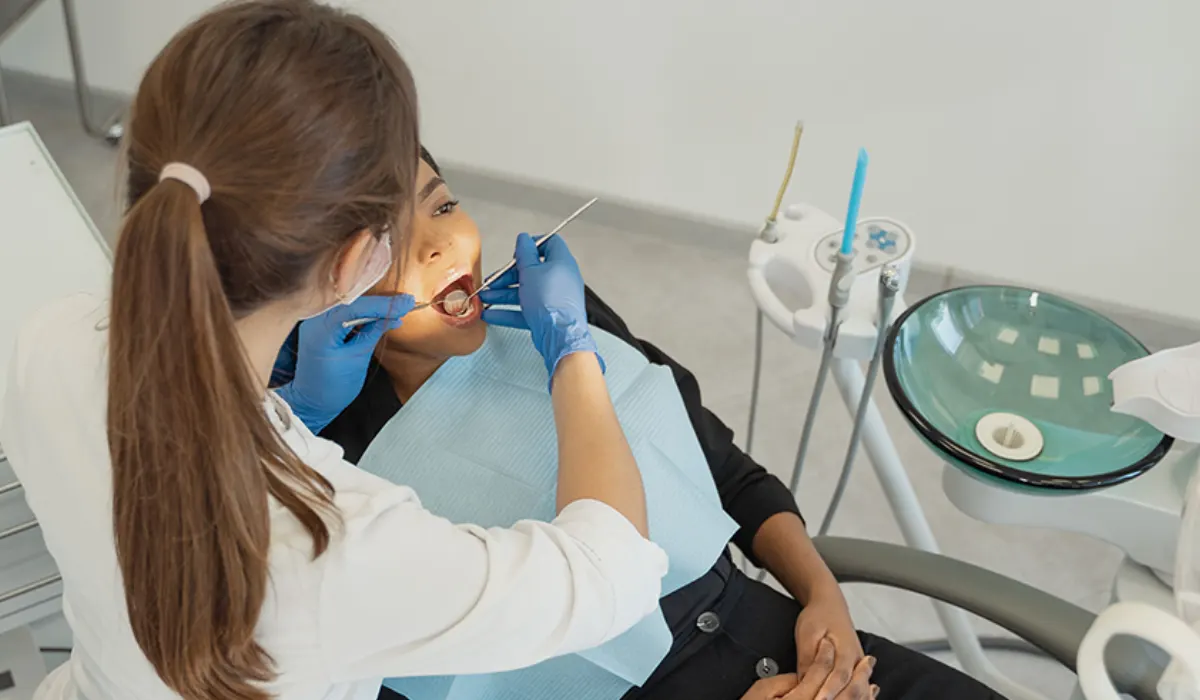
This is the main event but it’s not just a polish. A professional clean, often called a scale and polish, removes hard deposits that your toothbrush cannot shift. Hygienists use specialised hand instruments, ultrasonic scalers that vibrate and spray water, and sometimes lasers. The ultrasonic scaler handles heavy tartar removal, while hand instruments target smaller, stubborn calculus deposits. Think of it as detailing your car, but for your gums.
Plaque and Tartar Removal
This is the nitty-gritty work. Plaque is a sticky biofilm of bacteria that forms constantly on your teeth. Left for 48 hours, it starts hardening into calculus (tartar). This mineralised bacteria cannot be brushed off. The hygienist removes this tartar, especially deposits hiding below the gum line. Without removal, inflammation, bone loss, and eventually loose teeth can occur.
Gum Health Assessment
Every cleaning includes a periodontal assessment. Hygienists use a tiny ruler called a periodontal probe to measure the “pockets” between your gums and teeth. Healthy gums have pockets 1-3mm deep. Pockets over 4mm typically indicate gum disease. Bleeding during probing signals active inflammation that requires management.
Oral Hygiene Advice and Preventive Care
This is arguably the most important part of the job. Hygienists watch you brush and show you where you miss. They also apply preventive treatments like fluoride varnishes to strengthen enamel and sealants to protect the grooves of back teeth. In essence, they give you the cheat codes for oral health.
What Happens Before and After a Dental Hygienist Appointment?
Preparation and aftercare make the difference between a painful clean and an effective one.
Before Your Appointment
Here’s what no one tells you:
- Continue Brushing: Brush your teeth before you come in. Please.
- Medication Check: If you have a heart condition or require antibiotics before invasive procedures, let the practice know well in advance.
- X-rays: Recent X-rays help the hygienist see what’s happening below the gum line and between teeth.
- Sensitivity: Mention sensitive teeth; it changes the approach.
After Your Appointment
- Sensitivity is Normal: For a day or two, your teeth may feel sensitive, especially to cold. The “scaffolding” of tartar that was blocking nerve endings is now removed.
- Wait to Eat: If you received a fluoride varnish, wait 30 minutes before eating or drinking.
- Routine: Your gums might feel sore or bleed more easily for a day. That’s the inflammation settling.
- The “Squeaky” Feel: Your teeth will feel different because the biofilm has been stripped off.
Dental Hygienist vs Dentist: What’s the Difference?
This is the most common point of confusion. People often think the hygienist is a junior dentist, but they have different training, different scopes of practice, and completely different roles.
What a Dental Hygienist Does
Hygienists are prevention specialists. Focus areas include soft tissue management (gums) and hard tissue (teeth) surfaces above the gum line. Drilling, filling, or extracting teeth fall outside their scope. Cavity diagnosis is not performed, though signs of decay are identified and reported to the dentist. Practice remains largely within the “gum line” boundaries, delivering treatments that prevent disease before it develops.
What a Dentist Does
Dentists serve as both diagnostician and surgeon. X-rays are examined to diagnose tooth decay and bone loss. Restorative procedures like fillings, crowns, bridges, root canals, and extractions are performed by the dentist. Medications are prescribed and the overall treatment plan is overseen by the dentist. While the hygienist informs the dentist of their findings, the final medical diagnosis is determined by the dentist.
How Often Should You See a Dental Hygienist?
The “six-month rule” is a general guideline, not a law.
For most people with average oral hygiene and minimal risk factors, once every six months is sufficient to prevent plaque build-up. However, if you are a smoker, have a history of gum disease, or have a dry mouth condition, your hygienist may recommend a 3-month schedule.
Hygienists use a “recall interval” based on risk. Heavy staining or periodontitis makes frequent visits medically necessary to manage the disease, not just an upsell. Delaying visits can turn a simple scale into a lengthy and sometimes uncomfortable deep clean (root planing).
What Education Is Required to Be a Dental Hygienist?
Becoming a hygienist requires serious academic and clinical effort. It’s not something you learn on the job.
How Long Does It Take to Become a Dental Hygienist?
In the UK, it typically takes 2–3 years to complete an accredited dental hygiene program at the associate degree level. Some pursue a bachelor’s degree (4 years), which is usually required for roles in teaching, public health, or research. The course involves intense study of anatomy, periodontology, radiography, and clinical practice.
Do Dental Hygienists Need Professional Registration?
Absolutely. In the UK, they must register with the General Dental Council (GDC). In the US, they must be licensed by the state they work in, which usually requires passing the National Board Dental Hygiene Examination and a clinical board exam. Without a license, they cannot practice legally.
Final Thoughts
Your dental hygienist is arguably the most underrated member of your dental health team. They do the heavy lifting to prevent you from needing the dentist’s drill. Regular hygienist appointments are not a luxury they are a cost-effective way to avoid serious, expensive problems later. If you haven’t seen one in a while, it’s probably time.
Frequently Asked Questions
In the UK, you can often book directly with a hygienist if the practice offers “direct access.” In the US, it depends on state laws and the practice’s specific policies. A check-up by the dentist is usually still recommended annually.
Hygienists can spot suspicious areas, but they do not “diagnose” them. The dentist must perform the clinical examination and interpret X-rays to confirm a cavity and decide if a filling is needed.
Bleeding indicates inflammation. Healthy gums won’t bleed from a gentle clean. The bleeding is a sign that plaque is causing irritation, something you need to address with better flossing at home.
Without professional removal, plaque hardens into tartar. This leads to gingivitis (early gum disease), then periodontitis (bone loss), and eventually, tooth loss. It also contributes to bad breath.
No. They check for oral cancer, monitor gum pockets, apply fluoride, give dietary advice, and educate you on how to maintain oral hygiene at home.
Why Choose Queen’s Gate Dental Practice?
If you’re looking for a dental practice in London that takes prevention seriously, Queen’s Gate Dental Practice is where you need to be. We don’t just talk about plaque we show you exactly where it is and how to tackle it.
Our Dental Hygienist Miss Gosia Dali-Bey is highly trained, GDC-registered (GDC number: 267154), and skilled at making even the most anxious patient feel comfortable. We offer a comprehensive hygiene service that goes beyond the quick polish. We provide direct access hygiene appointments, meaning you can book with our hygienist without seeing the dentist first if you just need a clean. However, we always recommend a full check-up to ensure everything underneath is healthy.
Ready to get your oral health back on track? Book your hygiene appointment today.