The best way to reduce a gap between teeth depends on why the gap exists. Small spaces caused by tooth shape can often be improved with dental bonding or veneers, while larger gaps caused by tooth movement, bite problems, or jaw development may need orthodontic treatment like braces or clear aligners.
Some people search for how to reduce gap between teeth naturally at home, hoping there is a simple trick that closes the space permanently. The reality is that teeth gaps are part of your tooth structure, and moving teeth safely requires controlled pressure or reshaping methods. Home methods may improve appearance temporarily, but they usually cannot physically move teeth into a new position.
A dentist first looks at the reason behind the gap. Closing a gap without understanding the cause is like fixing a door that keeps moving without checking the loose hinges.
Why Do Teeth Gaps Happen?
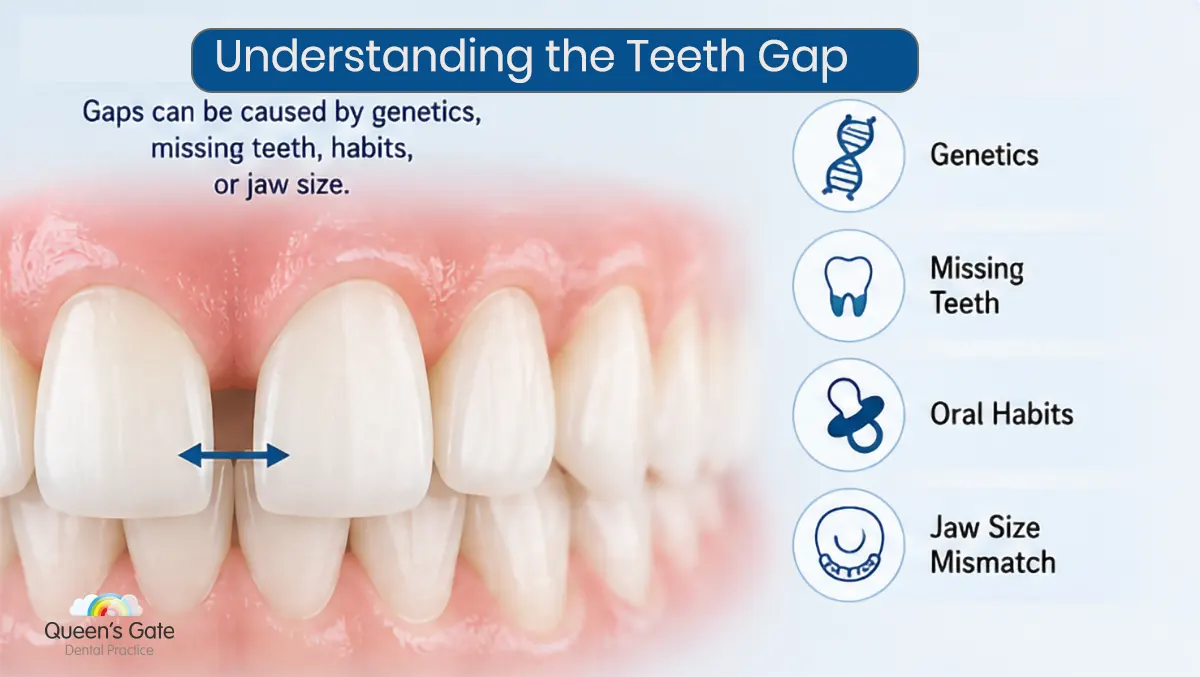
A gap between teeth, especially the front teeth, can happen for several reasons. It is not always because of poor dental care.
Common causes include:
- Natural tooth spacing where teeth are smaller than the available jaw space
- Missing teeth creating extra room
- A large labial frenulum (the small tissue connecting your lip and gum)
- Thumb sucking or tongue thrusting habits during childhood
- Gum problems causing teeth to shift
- Teeth that have moved over time due to pressure changes
Some people are born with a gap and keep it their entire life. Others notice a gap appearing later, which can sometimes indicate changes in the gums or tooth support.
Types of Teeth Gaps
Not every gap is treated the same way. Dentists usually identify the type of space before recommending treatment.
| Type of Gap | What It Means | Common Treatment |
|---|---|---|
| Front tooth gap (diastema) | Space between the two upper front teeth | Bonding, braces, aligners |
| Multiple teeth gaps | Spaces between several teeth | Orthodontic treatment |
| Gum-related gaps | Teeth moving because of gum issues | Gum treatment + alignment |
| Small cosmetic gaps | Mainly appearance-related | Bonding or veneers |
| Missing tooth gaps | Space left by a lost tooth | Implant, bridge, or orthodontics |
A small front gap might take one appointment to improve. A larger gap caused by tooth movement is a different situation completely.
How to Reduce Gap Between Teeth Naturally
Many people look for natural ways to close teeth gaps because they want to avoid dental treatment. It is worth understanding what is realistic.
You cannot safely push adult teeth together with your fingers, rubber bands, or homemade tools. Teeth are connected to bone and supported by ligaments. Moving them requires carefully calculated force.
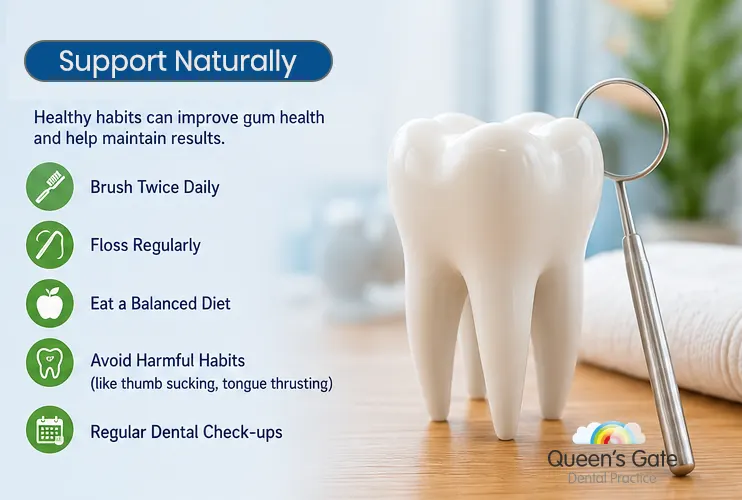
However, you can support healthier teeth by:
- Maintaining good gum health
- Treating gum inflammation early
- Avoiding habits that push teeth apart
- Wearing a dentist-approved retainer after orthodontic treatment
- Keeping regular dental checkups
Healthy gums are important because teeth movement is much more predictable when the supporting tissues are healthy.
Teeth Gap Filling at Home: Does It Work?
There are many online products and DIY methods claiming to fill gaps at home. Most of these focus on appearance rather than actually closing the space.
Temporary cosmetic products may hide a gap for a short time, but they do not solve the cause. Some DIY approaches can damage enamel or irritate gums.
For example, using elastic bands around teeth is risky. Dentists have seen cases where uncontrolled pressure damages gum tissue or causes teeth to become loose.
The safest “at-home” option is usually maintaining oral health while choosing a professional treatment that matches your situation.
Ways to Remove Teeth Gaps
There are several professional ways to close spaces between teeth.
Dental Bonding for Small Gaps
Dental bonding is one of the quickest ways to improve a small gap, especially between front teeth.
During bonding, a tooth-coloured resin material is shaped and attached to the tooth. The dentist carefully adjusts the shape so the teeth look more balanced.
Advantages:
- Usually completed in one visit
- More affordable than veneers
- Minimally invasive
- Natural-looking when done correctly
The limitation is that bonding adds material to the tooth. It does not actually move teeth together.
Front tooth bonding is commonly chosen when the gap is small and the teeth themselves are healthy.
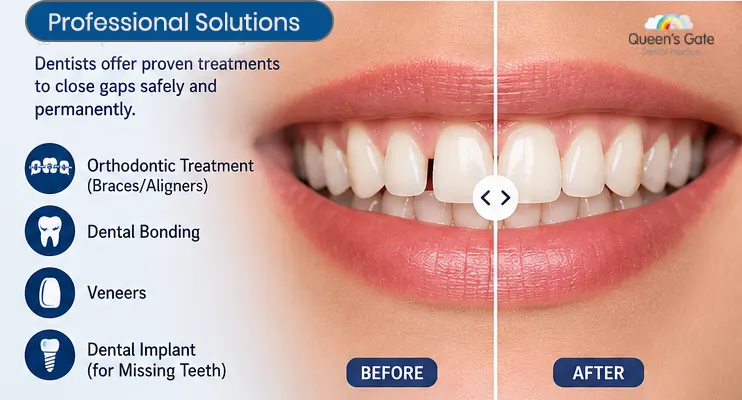
Braces for Closing Tooth Gaps
Braces remain one of the most predictable options for permanently closing gaps.
They work by applying gentle pressure over time, allowing the bone around the teeth to remodel as teeth move into position.
Braces may be recommended when:
- The gap is large
- Several teeth have spaces
- The bite needs correction
- Teeth are rotated or crowded
The process takes longer, but the result is usually more stable because the tooth position itself changes.
Clear Aligners
Clear aligners are another popular option. They use a series of removable trays to gradually move teeth.
Many adults choose aligners because they are less noticeable than traditional braces.
However, not every gap can be corrected with aligners alone. Complex cases may still need additional dental work.
How to Close Teeth Gap Permanently
If you want a long-term solution, the treatment needs to address why the gap appeared.
Permanent options may include:
- Orthodontic treatment
- Dental bonding
- Veneers
- Dental implants for missing teeth
- Gum treatment when necessary
A common mistake is closing the gap but ignoring the reason teeth moved. For example, if gum disease caused spacing, simply moving teeth without treating the gums can lead to future problems.
Retention after treatment is also important. Teeth naturally try to return toward their previous position, which is why retainers are often recommended after braces or aligners.
The NHS provides general guidance about orthodontic treatments and maintaining results after tooth movement.
Teeth Gap Filling Cost
The cost depends heavily on the method used, the number of teeth involved, and the complexity of the case.
Approximate factors affecting price:
- Dentist experience
- Location of the clinic
- Treatment material
- Number of appointments
- Whether additional procedures are needed
Dental bonding is usually less expensive than orthodontic treatment because it is a cosmetic reshaping procedure.
Braces and aligners cost more because they involve months of planning, monitoring, and tooth movement.
A consultation is usually the best way to understand the actual cost because two people with similar-looking gaps may need completely different treatments.
Cheapest Way to Close Gap in Teeth
The cheapest option is not always the best option.
For a small cosmetic gap, bonding may provide a good balance between cost and appearance.
For larger gaps, trying cheap temporary solutions often leads to spending more later when the problem needs proper correction.
The right question is not only “what is cheapest?” but “what gives a stable result without damaging my teeth?”
Teeth Gap Bands: Are They Safe?
Teeth gap bands are small elastic bands marketed as a way to pull teeth together.
They may appear to work because they create pressure, but the movement is uncontrolled.
Potential risks include:
- Gum damage
- Tooth loosening
- Damage to supporting tissues
- Uneven tooth movement
Professional orthodontic movement uses specific forces and regular monitoring. A random elastic band cannot provide that control.
Dental Bonding Front Teeth Gap: What Patients Should Know
Dental bonding can create a big visual improvement, especially when the gap is small.
But patients should understand that bonding has maintenance needs. The material can stain over time and may need repair depending on habits like nail biting, chewing hard objects, or heavy staining from coffee and smoking.
A good dentist focuses on matching:
- Tooth colour
- Tooth shape
- Smile proportions
- Natural appearance
The goal is not just making the gap disappear. The goal is making the smile look balanced.
Frequently Asked Questions
Gaps between teeth, also known as diastema, can develop for several reasons. The most common causes include genetics, where the size of the teeth does not match the jaw structure, or missing teeth that create extra space. Habits like thumb sucking, tongue thrusting, or improper swallowing patterns can also push teeth apart over time. In some cases, an oversized labial frenum (the tissue connecting the upper lip to the gums) may contribute to spacing issues.
In some children, minor gaps may close naturally as permanent teeth grow and the jaw develops. However, in most teens and adults, gaps do not close on their own. Without orthodontic treatment or dental intervention, spacing usually remains stable or may even increase depending on bite pressure and oral habits.
Teeth gaps are not always harmful, and many people live with them without issues. However, in some cases, large gaps can affect bite alignment, speech clarity, and chewing efficiency. They may also increase the risk of food getting trapped, which can contribute to plaque buildup and gum problems if not cleaned properly.
It depends on the method. Bonding may take one visit, while braces or aligners can take several months.
For small cosmetic gaps, dental bonding is often one of the quickest options.
Why Choose Queen’s Gate Dental Practice for Teeth Gap Treatment?
Choosing the right treatment starts with getting the right assessment. A gap between teeth may look simple, but the cause behind it determines whether bonding, orthodontics, or another option makes sense.
At Queen’s Gate Dental Practice, the focus is on understanding your smile, discussing realistic options, and recommending treatment based on your actual dental needs rather than pushing a one size fits all solution.
Whether you are considering dental bonding for a small front tooth gap or looking for a longer-term approach to improve tooth alignment, a professional consultation helps you understand what will work best for your smile.
Book a consultation with Queen’s Gate Dental Practice to discuss your teeth gap concerns and explore suitable treatment options for achieving a healthier, more balanced smile.