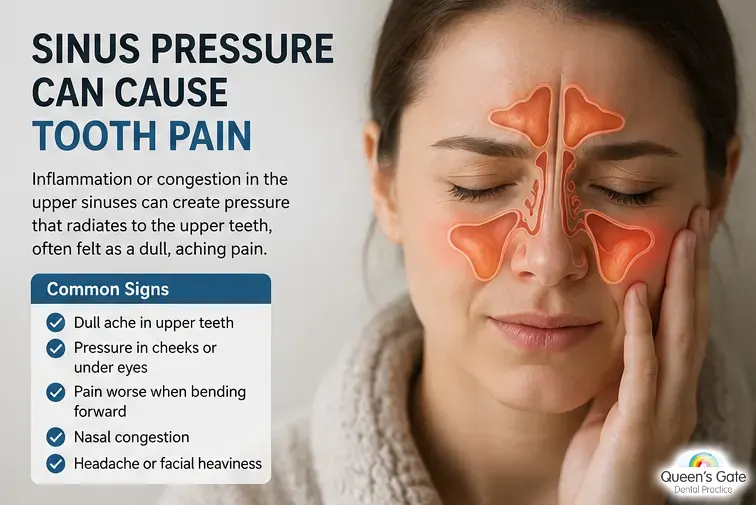
Yes, sinusitis can absolutely cause tooth pain, especially in the upper back teeth. And it’s one of those things that fools people all the time because it feels exactly like a dental problem, even when the teeth are completely fine.
What’s really happening is pressure. The maxillary sinuses sit just above your upper molars. When they get inflamed or filled with mucus during sinusitis, that pressure pushes downward into the tooth roots. The nerves overlap, so your brain interprets it as toothache.
Not sharp. Not clean. More like a dull, heavy ache that moves around.
How sinusitis actually creates tooth pain
The connection is anatomical, not random.
The upper molars sit very close to the sinus floor. In some people, the separation is thin enough that inflammation inside the sinus directly affects nerve endings near the tooth roots.
When swelling increases:
- Sinus pressure builds up
- Drainage gets blocked
- Nerve signals get confused
- Pain is “referred” into teeth
It’s not damage to the teeth. It’s pressure misread by the nervous system.
Can sinus infection cause tooth pain on one side?
Yes, and it often does.
Sinus infections rarely hit both sides equally. One sinus can be more blocked than the other, which leads to:
- One-sided upper tooth pain
- Pressure in one cheek
- Pain near one eye
- Tender upper molars on a single side
This is where people usually suspect a hidden cavity. But multiple teeth hurting on one side with no dental findings is a classic sinus pattern.
Upper front teeth pain sinus
Even though molars are more affected, front teeth can sometimes feel pain too.
This happens when:
- Sinus pressure is strong
- Nerve pathways overlap
- Inflammation spreads beyond typical zones
It feels odd, more like pressure behind teeth than actual tooth pain.
Dental sinus infection symptoms
Dentists don’t just look at teeth. They look at patterns.
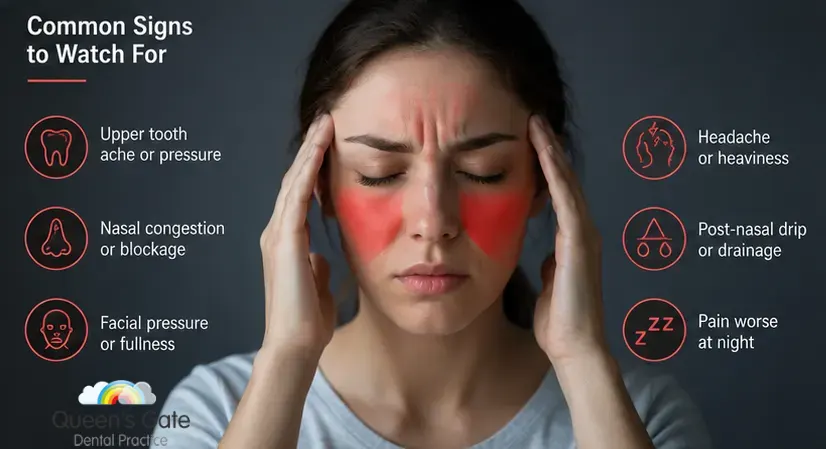
Common signs include:
- Multiple upper teeth sore at once
- No visible decay or gum issue
- Pain shifts location
- Recent cold or flu
- Sinus congestion or pressure
A key clue: pain increases when bending forward.
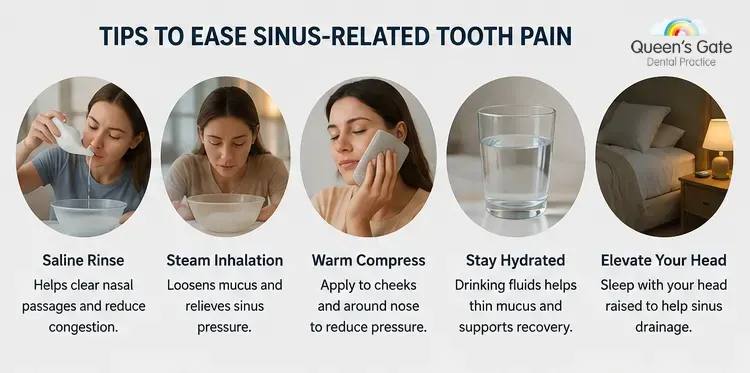
How to relieve tooth pain from sinus pressure
This isn’t really about “fixing teeth pain.” It’s about reducing sinus pressure.
What actually works:
- Saline nasal rinses
- Steam inhalation (2–3 times daily)
- Warm compress on cheeks
- Hydration (very underrated)
- Sleeping with head elevated
- Short-term decongestants (if suitable)
Painkillers help, but only partially. Pressure relief is what actually changes the pain.
What is the best painkiller for sinus toothache
There’s no perfect option, but clinically:
- Ibuprofen → best for inflammation + pain
- Paracetamol → mild relief only
- Combination therapy → stronger short-term control
But here’s the truth most people miss:
If sinus drainage is blocked, no painkiller fully solves the problem.
Unbearable sinus tooth pain
When sinus pressure becomes severe, it stops feeling like “normal discomfort.”
It can become:
- Deep throbbing pain
- Worse at night
- Radiating into jaw or ear
- Confused with root infection
This usually means significant blockage or infection buildup, not just mild sinus irritation.
How long does tooth pain from sinus infection last
It depends on the type of sinusitis:
| Type | Duration |
|---|---|
| Viral sinusitis | 5–10 days |
| Post-viral inflammation | 1–3 weeks |
| Bacterial infection | 2–4 weeks (if untreated) |
| Allergy-related pressure | recurring/ongoing |
Tooth pain often fades before full sinus recovery.
Pressure points for sinus pain in teeth
These don’t “cure” anything but can reduce pressure temporarily:
- Under the cheekbones → improves drainage feeling
- Side of nose → reduces congestion pressure reflex
- Between eyebrows → helps frontal sinus relief
Warm compress works better than most people expect.
A real-world diagnostic reality
This gets overlooked a lot:
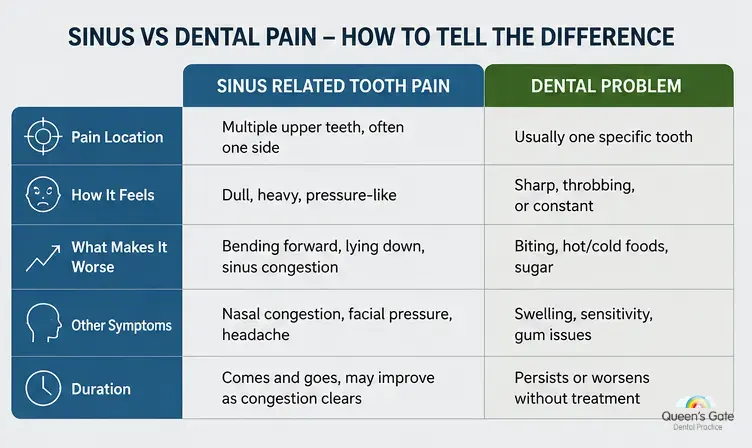
Not every sinus-like tooth pain is sinusitis.
Dentists constantly catch:
- Cracked teeth
- Early root infections
- Gum abscesses
So if pain is:
- Sharp
- One specific tooth
- Triggered by biting or cold
…it’s more likely dental.
Sinus pain is usually spread out and inconsistent.
FAQ
Yes, especially in upper molars. It can feel identical at first.
Because sinus pressure irritates shared nerve pathways.
If pain is widespread with congestion → doctor. If one tooth hurts sharply → dentist.
Only if bacterial sinus infection is confirmed.
Why choose Queen’s Gate Dental Practice
When tooth pain overlaps with sinus symptoms, guessing leads nowhere. At Queen’s Gate Dental Practice, the focus is on properly identifying whether the issue is dental or sinus-related before jumping into treatment.
What matters most is accuracy. Some cases need dental treatment, others need reassurance or referral instead. That distinction prevents unnecessary procedures and saves people from weeks of confusion.
The approach is calm, practical, and based on proper examination rather than assumptions. If imaging or further checks are needed, they’re used only when they actually add value.
If you’re dealing with upper tooth pain that doesn’t feel like a typical dental problem, don’t sit on it or keep guessing between sinus and teeth. The quickest way to get clarity is a proper dental checkup so the real cause can be identified and treated correctly.
Contact Queen’s Gate Dental Practice to book an appointment and get it checked properly.