
A confident smile can change everything from how you feel about yourself to how others perceive you. Dental implants before and after results are some of the most dramatic transformations in modern dentistry. Patients often go from hiding their teeth to proudly showing off a natural-looking smile.
Key Takeaways
- Before-and-after changes include chewing improvement, facial support, and confidence
- Final results depend on gum health and skilled execution
- Implant treatment is progressive, not instant
- Maintenance matters for long-term outcomes
- Professional planning ensures predictable aesthetics
What Changes Before and After Dental Implants?
When someone has missing teeth, failing teeth, or loose dentures, several oral and facial changes gradually occur:
Before Implants Common Functional & Aesthetic Issues
- Reduced ability to bite and chew properly
- Bone shrinkage in the jaw due to missing roots
- Collapsed facial profile
- Gaps that cause shifting of adjacent teeth
- Speech changes due to missing stability
- Reduced self-confidence when smiling
Research confirms that tooth loss leads to gradual bone deterioration because the jawbone no longer receives stimulation from chewing pressure (NLM).
What Patients Experience After Implants
- Restoration of natural bite strength
- Improved pronunciation
- Healthier jawbone due to artificial root integration
- Long-term durability with proper care
- More youthful facial structure
- Increased willingness to smile confidently
Speaking, smiling, eating, and socializing often change immediately after final crown placement.
Before and After Dental Implants Results-Timeline
Dental implant treatment is a staged process because bone healing (osseointegration) requires biological stability.
Step-by-Step Transformation Timeline
| Stage | What Happens | Visible & Functional Change |
|---|---|---|
| Initial Consultation | X-rays, scans, gum health assessment | Understanding tooth replacement planning |
| Implant Placement | Titanium or zirconia root placed | Minimal immediate change |
| Healing/Integration | Bone fuses with implant | Gradual improvement in stability |
| Final Crown Placement | Porcelain crown attached | Full visible transformation |
| Final Bite Adjustment | Doctor calibrates bite | Best chewing performance |
Typical Duration: 3–6 months depending on healing speed, gum health, and bone density.
Patients undergoing same day dental implants experience immediate aesthetic improvement, but internal bone integration still continues beneath the crown
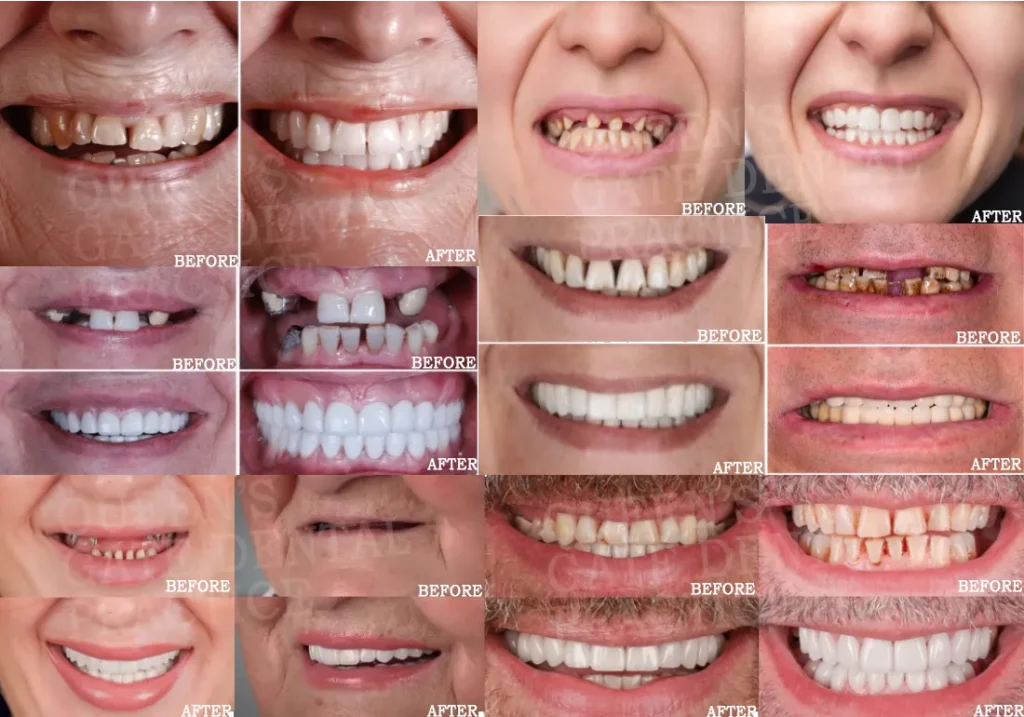
Dental Implants Before After Photos
Before-and-after photos highlight implant-supported restorations.
What They Reveal
Visible Aesthetic Changes
- Color-matched crowns replacing missing teeth
- Corrected alignment gaps
- More proportionate smile width
- Improved gum contour
Structural Changes
- Stronger bite and chewing
- Stabilized facial muscles
- Improved lip support
Functional Differences After Healing
Speech
Missing front teeth often cause:
- whistling or air escape during pronunciation
- after implants, phonetics normalise.
Chewing Power
Implants function like natural roots anchored into bone.
According to accepted implant dentistry principles:
- chewing strength improves up to 80–90% of natural teeth equivalent
- patients often return to steaks, nuts, apples, and crunchy foods
Can You Have Dental Implants With Gum Disease?
Yes with proper treatment first.
Requirements Before Implants
- gum infection must be controlled
- bone density assessed
- periodontal stability achieved
Untreated gum disease increases implant failure risk.
Clinically accepted implant protocols require that infection is resolved through:
- scaling
- root planing
- gum regeneration (when needed)
Once stabilized, patients typically receive implants successfully.
Why No Dairy After Dental Implant Surgery?
Many dental implant especialists recommend avoiding dairy immediately after implant surgery because:
- certain dairy products may increase oral bacteria exposure
- dairy may interact with antibiotics for some patients
- milk-based proteins occasionally affect clot formation indirectly
This recommendation is short-term and varies based on treatment plans.
Screw-Retained vs Screwless Dental Implants — What to Expect Before & After
Screw-Retained Designs
✔ easy maintenance
✔ retrievable for cleanings or adjustments
✔ offers predictable positioning
“Screwless” / Cement-Retained Designs
✔ often used where screw access would be visible
✔ aesthetic advantage
Patients notice no difference in chewing or stability between the two.
Common Myths vs Reality About Implant Results
| Myth | Reality |
|---|---|
| Dental implants look fake | Premium crowns mimic enamel translucency |
| Implants are painful | Mild discomfort for 1–2 days |
| Implants are high maintenance | Same cleaning as natural teeth |
| Implants are risky | When planned properly, success rate is high |
| Dentures and implants function similarly | Implants are structurally anchored |
Expert Tips to Maintain Results After Surgery
- Maintain routine hygiene appointments
- Avoid biting ice and very hard objects
- Brush twice daily
- Use floss or interdental brushes
- Follow your dentist’s follow-up schedule
Patients who follow instructions generally report long-term satisfaction.
Why Queen’s Gate Dental Practice Is the Best Choice for Dental Implants in London
Patients consistently choose our implant team because of:
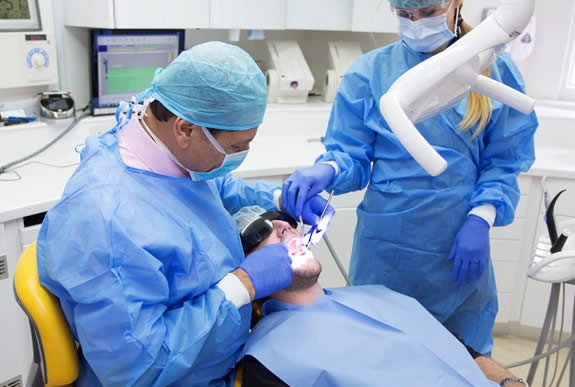
⭐ Precision treatment planning using advanced imaging
⭐ Natural-looking restoration with correct shape, shade & translucency
⭐ Proven experienced clinicians
⭐ Tailored timelines based on biological healing
⭐ High-quality implant systems and sterilization standards
We help patients regain confidence, full chewing ability, and a healthier smile through personalized implant-based rehabilitation.
If you are considering dental implants, contact our experts to receive clinically-informed guidance on timelines, success factors, and ideal treatment choices tailored genuinely to your smile.
FAQ
Most last 15+ years; many exceed 25 years with regular hygiene care.
Visible change occurs at crown placement; bone stability develops progressively.
Yes full arch restorations and implant-supported bridges are common.
Yes, once healed, patients report normal chewing function.
Yes with clinical supervision and compliance to healing protocols.
Often 4–6 implants support a full arch.
General health matters more than age.
Very rare; mostly affected by uncontrolled gum disease or improper maintenance.
Often equivalent to 80–90% of natural teeth.
Precise alignment, gum profile management, and bite calibration determine final results.